


The other day, I was skimming through my Facebook feed when a video caught my eye. The subject of the video was a high-speed police chase. I didn’t click on it, but I sat there and watched it play out for about 30 or 40 seconds. Then I went on with my doomscrolling—uh, performing my civic duty to stay informed.
The next day, I noticed that every other post on my feed was a police chase, or something related to one.
I’d noticed this behavior in the past, but it was usually in the form of targeted advertisements based on something I had deliberately clicked. But now, the algorithms are spinning up entire landscapes of content based simply on where my eyes linger.
It turns out that what we are witnessing is a fundamental shift from Social Media to Interest Media. Put simply, rather than your feed being shaped by who you know—the posts, likes, and shares of your friends and networks—the algorithms now bypass your social circle entirely to track your real-time attention. They measure the exact number of seconds your eyes linger on a given post or article. The system then scurries through the global digital environment to serve you an endless supply of content related to that passing focus.
In my mind, there is an immense danger in this. It sets up the ideal conditions for us to get immersed in our own private echo chambers—leaving us completely at risk of “hot-boxing” ourselves in negativity, inaccurate information, and polarizing ideas.
What is completely removed in this shift from social-based to interest-based feeds is the human buffer. We no longer have the natural friction of friends or community to point out where our thinking might be going astray, or to remind us that a story isn’t real—even though it looks real on the screen. All we have is an algorithm that says, “Oh… you looked at that? Here is a lot more.”
This loop also effectively eliminates the chance that we will stumble upon an opposing viewpoint or a fresh way of looking at a situation. Your feed is automatically filled with ideas and opinions that match your current state of mind—however wonky and unhelpful it may be.
Now, my purpose here isn’t to call out the carelessness of tech companies or the dangerous nature of their algorithms. After all, they are only giving us what we pay attention to, right?
Nor is it to give you a list of life-hacks on how to trick the software or protect your data.
My purpose is to point toward something much deeper: the increasing importance of understanding how our own minds work.
We are driving down a road of hyper-realistic, AI-generated content designed specifically to let us stew privately in the steamy halls of our own minds. I don’t know about you, but my internal BS detector is already firing on all cylinders when I scroll.
But here’s the problem: as AI content gets better and better, it will become increasingly difficult to separate fact from fiction. Relying on our intellect alone to spot the fakes is a losing game. The fabrications will become so seamless, and the algorithms so sophisticated, that our intellect won't even realize it's being managed.
So what are we to do?
Well, we can certainly work to ratchet up our intellectual defenses. We can also try to trick the algorithms by being hyper-intentional with our scrolling. We can even hope some other tech company builds a tool to help us sort the rot from the harvest.
But that’s just more of the same. It requires your precious attention to be even further divided. Not only is your mind being pulled between multiple platforms and interest angles, but now you have to work double-time just to discern what is real and what is relevant.
Sounds exhausting to me… and perhaps a bit futile.
In my mind, the real answer is to step back and challenge what we think we know about the nature of our human experience. It’s to realize that we don’t live in a reality “out there” that is being foisted upon us. We aren’t victims of algorithms, AI, or media companies. We are the ones rendering our experience of those things—from the inside out.
The screen only holds pixels; your mind is what gives them the power to make you angry, anxious, or certain.
In this realization comes true freedom. Freedom from victimhood. Freedom to catch wise when an external force is trying to capture your attention for profit or power. Freedom to direct your attention away from negativity and toward love and understanding.
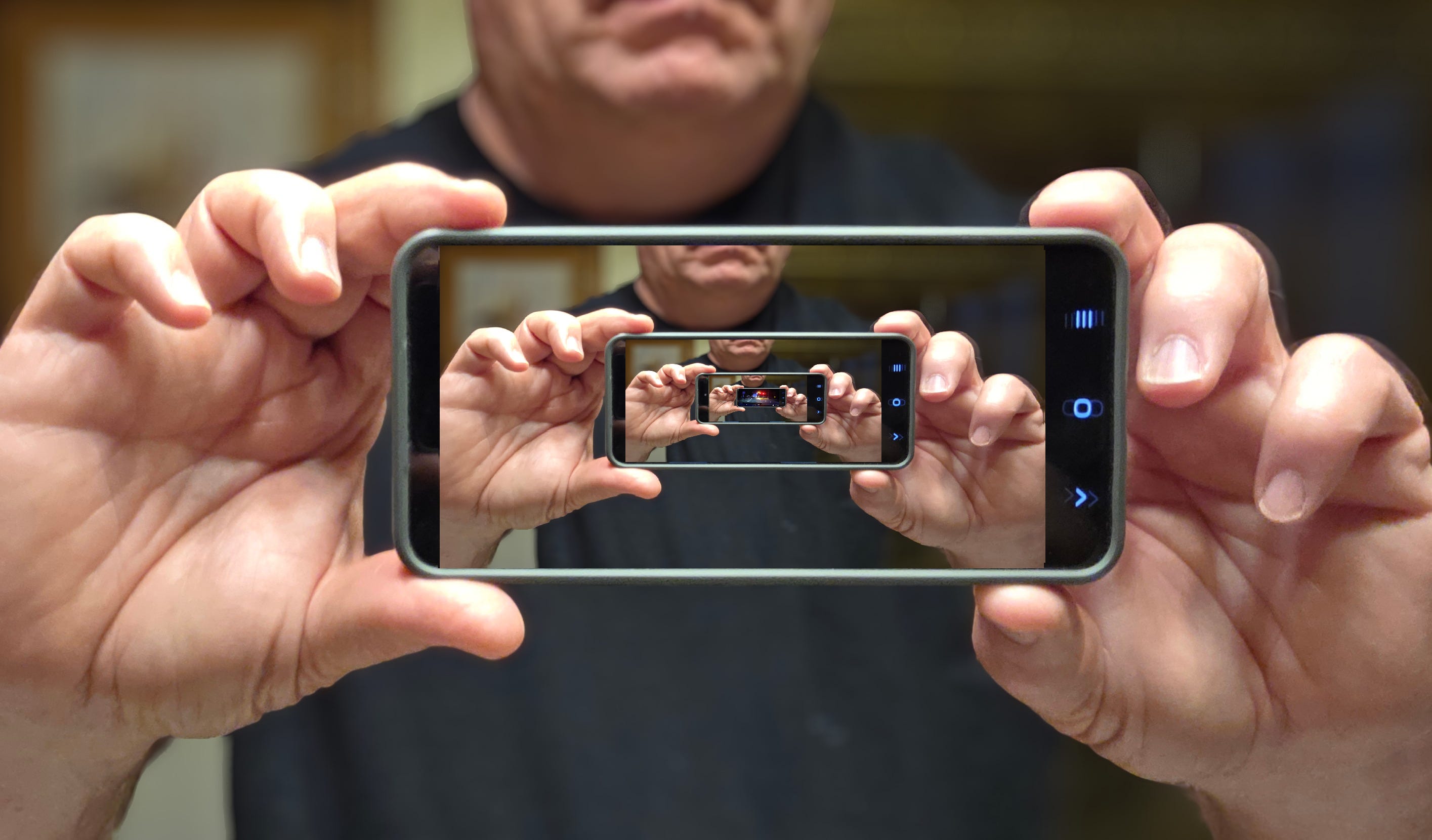
When you see how the projector works, the movie on the screen loses its ability to pull you under. You realize that you aren't at the mercy of a high-tech world; you are the one projecting it. The screen, the algorithm, and even your thoughts about them are all a real-time creation of your own mind. With that clarity, your precious attention naturally settles away from the noise and returns to what truly matters.
I challenge you to begin looking under the hood at how this system actually works in your own life. To help you point in this direction, I wrote a short, easy-to-read guide called Rendered Reality: The Missing User Manual for the Human Experience, and I want you to have it for free.
Here is a quick snapshot of what you’ll find inside:
The Projector vs. The Screen: Why we consistently mistake our internal thoughts for external events—and how to spot the difference instantly.
The Myth of the Outside-In World: A clear look at how our feelings are telling us about our current thinking, never about our circumstances, our bank accounts, or our social media feeds.
The Built-In Navigation System: How to access the natural clarity, wisdom, and resilience you already possess once you stop trying to intellectually micro-manage your mind.
I put the entire framework together into a short guide to give you a clear, foundational understanding of how your mind actually works (vs. how you think it works). Click below to grab your copy:
I promise you it will completely change how you see your feed—and your world.